Flux prompt generator · free
Flux prompt generator
Flux answers to descriptive sentences, not tag soup. Upload an image and get a prompt written the way Flux expects to read it.
Free & instant — no sign-up to get prompts

The workbench
Upload once. Get every model's version.
One analysis, formatted for the model you actually use — copy it, or generate the image right here.
Your image

Or try one
A photorealistic cinematic portrait, young woman wearing a beige trench coat, gentle window light from the left, muted earth-tone palette, 85mm lens, creamy bokeh, natural skin texture.
Subject
woman, beige trench coat
Composition
waist-up, centered
Lighting
soft window light
Style
cinematic, muted
Camera
85mm, f/1.8
Negative
blur, extra fingers
Proof
The prompt rebuilds your image.
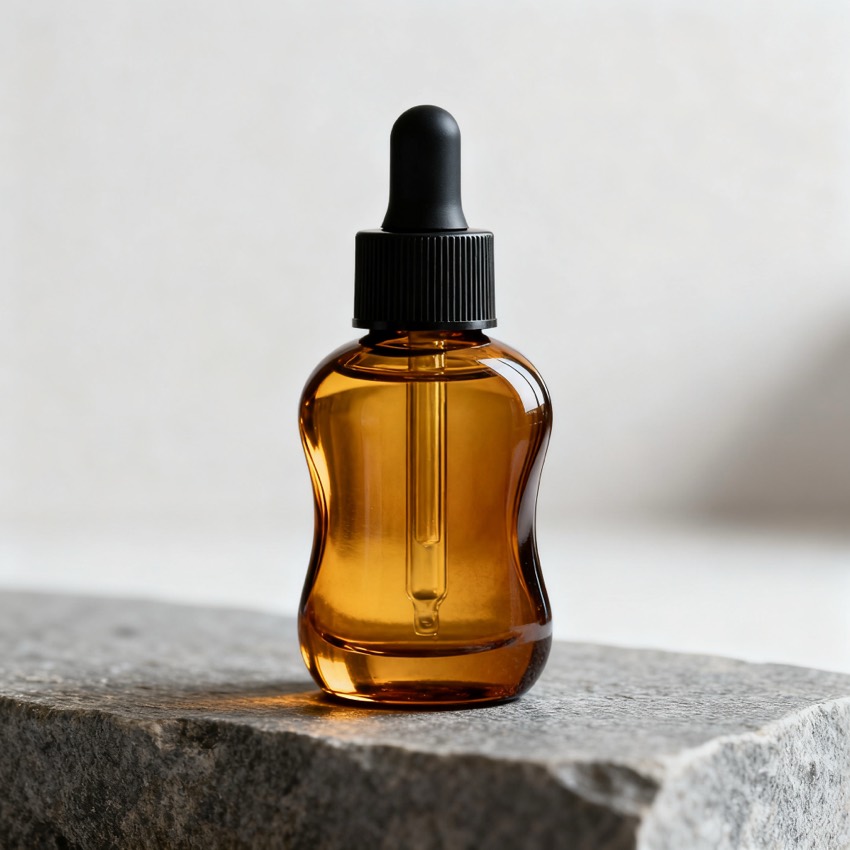
Every prompt comes with a recreation, side by side with your original — so you know it works before you use it.




Prompt library
Steal from a gallery of working prompts.
Browse by look, model and subject. Tap any image to load its prompt into the workbench.








From image to Flux prompt
What a Flux prompt generator does
It turns a reference image into the kind of prompt Flux actually rewards: connected descriptive language rather than a pile of comma-separated tags.
Flux came out of a different lineage than the tag-driven models, and it shows in what it responds to. Prompts written as tag soup — "portrait, 85mm, cinematic, moody, 8k, masterpiece" — underperform on Flux compared with the same content written as description that names the subject and then places it in a scene. Flux is also notably better at rendering legible text inside an image, which is worth saying explicitly in the prompt when your reference contains any. Upload your image here and the analysis is assembled into flowing description: what the subject is, where it sits in the frame, how it is lit, what the colour treatment is, what lens character the original has. The individual fields stay editable, so you can lengthen the parts that matter to you and cut the ones that do not before copying.
Flux specifics
How a Flux prompt differs from an SD prompt
The same picture needs genuinely different wording for these two models.
- Description, not tags
- The prompt is written as connected description. Quality-booster tags like "masterpiece, 8k, best quality" — habits carried over from tag-trained models — are left out, because on Flux they mostly consume prompt budget without changing the render.
- No separate negative field
- Flux workflows commonly have no negative prompt to fill in. Anything worth avoiding is handled by describing what should be there instead, so the prompt stays usable when there is nowhere to put exclusions.
- Text inside the image
- If your reference contains a sign, a label or a title, the text is quoted in the prompt — one of the places Flux clearly outperforms older models, but only if you ask for it explicitly.
- Longer prompts hold up
- Flux tolerates a detailed prompt better than a short one, so the output is written to be specific rather than terse — and every part stays editable if you want it shorter.
Other models
Same image, different model
One upload produces a prompt for every model on the workbench. If you are working in Midjourney, Stable Diffusion and Gemini / Nano Banana open that page instead — the phrasing is rewritten for how each of them reads a prompt. The home page shows all of them from a single analysis.
Flux questions
Flux prompt questions
- Does this work for Flux dev, schnell and pro?
- Yes — the prompt is plain text and does not depend on which Flux variant you run. The faster distilled variants follow a long prompt less closely than the larger ones, so if your result drifts, shorten the prompt to the parts you care about most rather than rewriting it.
- Why is there no negative prompt?
- Most Flux setups do not expose one in the way Stable Diffusion does. Rather than hand you a field your workflow cannot use, the exclusions are folded into positive description. If your particular front-end does support negatives, the Stable Diffusion page on this site gives you a ready-made negative list you can reuse.
- Can I paste this into ComfyUI?
- Yes. Copy it straight into the positive text node. The prompt contains no model-specific syntax or parameter flags, so nothing needs stripping first.
- Is it free?
- Reading and copying the Flux prompt is free and requires no account. Signing in is only needed to generate a recreation image here so you can check the prompt before running it in your own pipeline.